





Brief word cloud background Word cloud pill asking 'What should we build next?' Word cloud pill asking 'Who are we building for?' Word cloud pill asking 'How do we know it's working?' Word cloud pill asking 'What should we stop doing?' Word cloud pill asking 'Any user research about this feature?' Word cloud pill asking 'What did we decide about using Jest?' Word cloud pill asking 'What did we push to staging last?'

Answer Any Product Question Instantly

Scale Your Product Thinking

Brief is a Strategy sounding board, Context Aggregator, and Self-Multiplier. Be in more places with less work.

Brief Product Management Suite

AI coding tools transformed engineering. Brief does the same for product management.

Brief Product Chat

Brief understands product thinking. Use it as a sounding board for prioritization, trade-offs, and strategic decisions.

Product Graph

Brief goes beyond the spec. It connects what you're building to why it matters and who it serves.

Integrations

Use Jira, Linear, Notion, or whatever works for you. Brief fits your workflow, not the other way around.

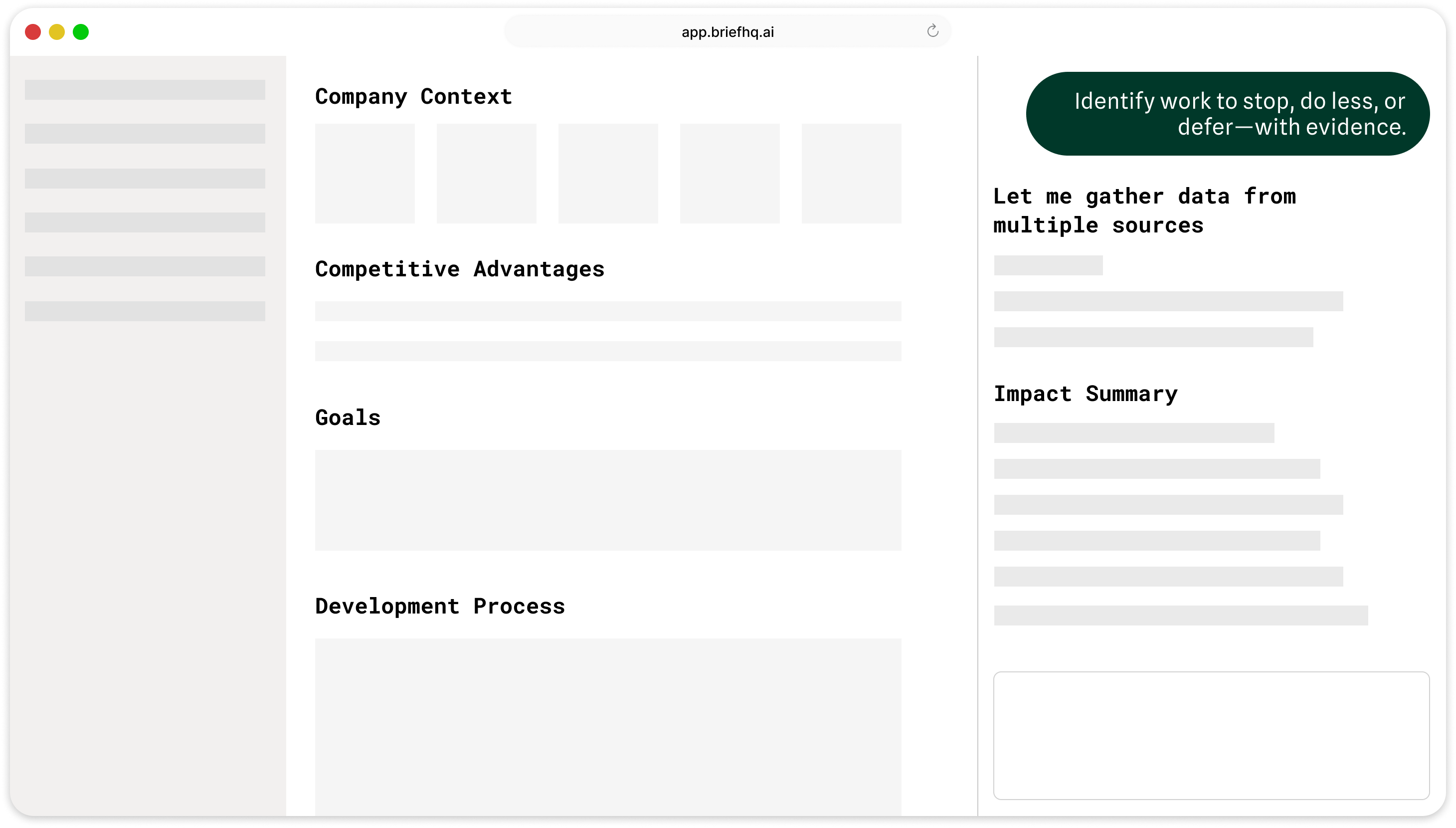
Brief Product Management Suite interface showing context and strategy

Why This Matters

Your decisions should compound

When you make a strategic call, it should inform related work for months. Not get lost after the ticket closes.

Without Brief

  • Strategic decisions don't persist
  • Engineers lack context at build-time
  • Good judgment doesn't scale
3D brain illustration representing strategic thinking
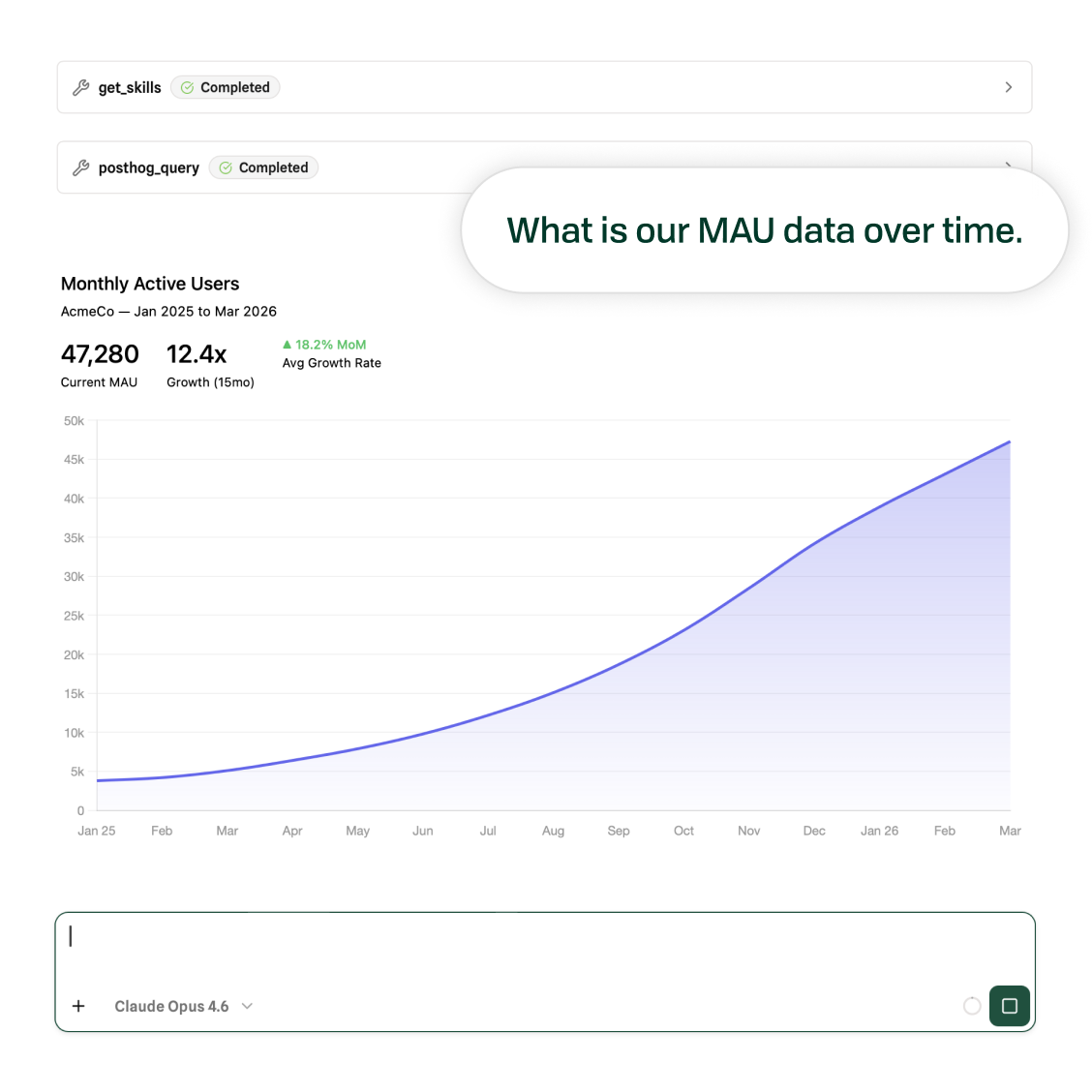
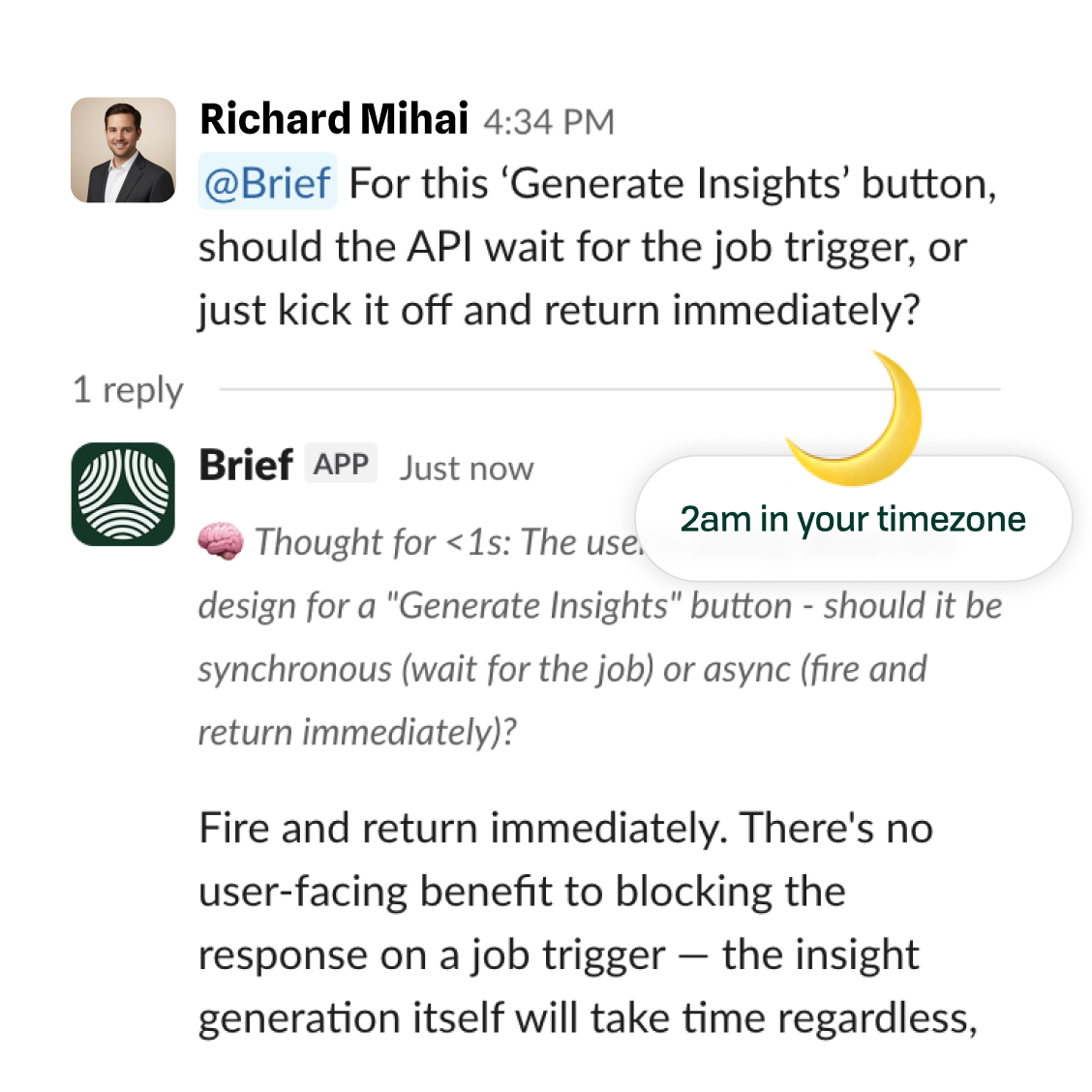
Brief chat interface answering strategic product questions

Your strategic co-pilot that actually knows your product

Ask Brief anything about your product strategy, and get answers backed by your actual decisions, docs, and integrations. "Should we price this at $99?" "Does this fit our ICP?" "What's blocking our mobile release?" Brief searches across your decision log, Notion docs, Linear tickets, and Slack threads to give you context-specific advice. Not generic best practices.

Your product strategy, structured and queryable

Brief structures your ICP, goals, competitive advantages, and key metrics into a living graph. Everything connects: decisions link to goals, features link to customer needs, metrics link to outcomes. Your strategy isn't buried in docs. It's accessible, queryable, and always up-to-date. No more stale documentation. No more "where did we decide that?"

Product graph showing ICP, goals, and metrics
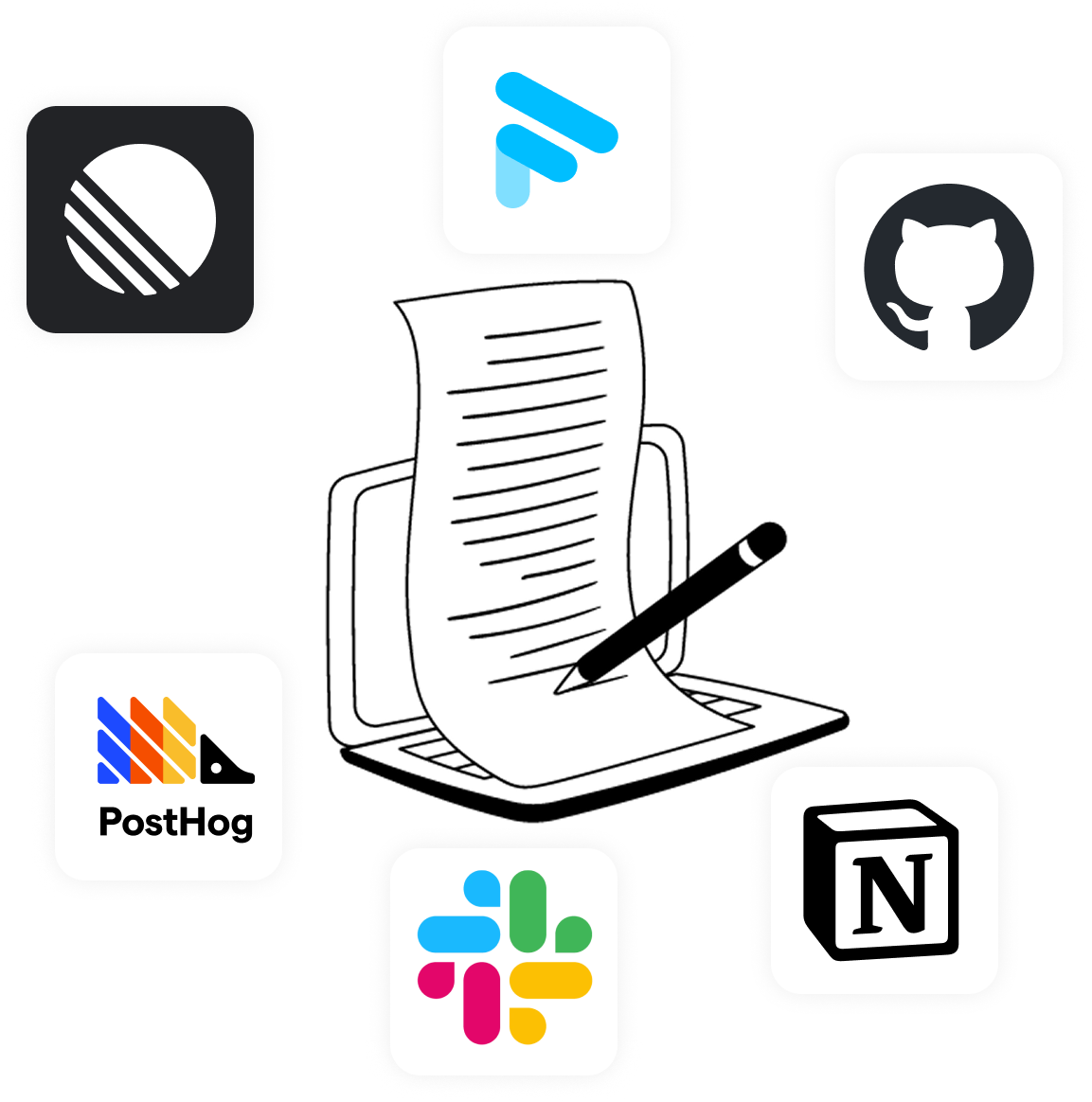
Brief integrations with Slack, Notion, Linear, GitHub, and Fathom

Context from everywhere, accessible in one place

Brief connects with Slack, Notion, Linear, GitHub, and Fathom to pull decisions, specs, and progress into one searchable layer. When you need context, you're not digging through 12 tools. You're asking Brief. Your product knowledge becomes infrastructure, not archaeology. Spend less time finding information, more time making decisions.

FAQ

I want my decisions to have more lasting impact. How does Brief help?

When you make a strategic decision, Brief ensures it compounds. Instead of getting lost in Slack or buried in a PRD, your reasoning becomes part of how the team builds.

Example: You decide "Use Stripe's dispute resolution API instead of building custom." You write it once. Two quarters later, an engineer adding subscription management sees that decision when their AI queries Brief. They stick with Stripe. Your original decision prevented scope creep you never saw coming.

How do I keep Brief updated without more work?

Brief reads your existing workflow:

  • Write a ticket → Brief spins up a worker to capture the problem and priority
  • Comment "we're not doing custom auth" → Auto-recorded as a decision
  • Update a PRD → Context automatically syncs

It's product memory that accumulates as you work, not another doc you have to maintain.

What if I don't have perfect documentation?

Start with what you have. Brief works with partial context. As you make decisions naturally (in tickets, comments, docs), the context grows.

Can Brief reduce drift between "what I wanted" and "what got built"?

Yes. When engineers build features, their AI assistants reference your actual decisions. If you said "mobile-first" or "ship fast, polish later," the AI knows. Less re-work, less "that's not what I meant."

What about onboarding new PMs or engineers?

They can ask Brief directly: "Why did we choose Stripe?", "What constraints shaped our auth approach?". They get full context, not just "because we decided that", they see the customer need, the alternatives considered, and the trade-offs.

AI built for Product

Brief makes your product judgment scalable. Capture your strategy once, and it becomes accessible to everyone who needs it: engineers shipping features, AI agents writing code, new hires getting up to speed.

You set the direction. Brief makes sure everyone stays aligned. Stop answering the same questions. Start building the leverage that lets you focus on what matters: talking to customers, making hard calls, and steering the product.