On Taste
Or, tech companies try to speedrun philosophy.

Somewhere in the last couple of years we crossed a line. The machine doesn't just autocomplete your code anymore, it ships the whole app. It designs the landing page, picks the font, writes the copy, wires up the flow. And the thing it produces is... fine. Kinda MEH tbh. Technically correct. Functional. And so laughably tasteless.
It's capital S "Slop"... So a cottage industry of style guides and SKILL.md files promises to bolt taste into your coding agent. Taste is suddenly the most valuable, most discussed, most monetizable thing in software apparently.
Well, If you're going to teach a machine to have taste (why, lol), it's probably worth doing a little reading first. Below is a very bad/short history of the topic for those who are curious:
Hume: Of the Standard of Taste (1757)
David Hume is the classic definition. In Of the Standard of Taste, he's wrestling with an obvious problem: taste feels totally subjective, yet we're all completely sure some things are just better than others. Milton beats a greeting card. So how do you get an objective standard out of subjective feeling?
His answer: the ideal critic. A person of "strong sense, united to delicate sentiment, improved by practice, perfected by comparison, and cleared of all prejudice." Find the rare few who actually have all that, and their joint verdict is the standard. Good taste is what the true judges agree on.
This is the Steve Jobs argument. One person of impeccable, hard-won taste decides what's good, and the rest of us defer. It's seductive and it's been the operating model of every great creative-director-as-dictator story we tell.
It also has a hole you could drive a truck through. How do you spot an ideal critic? By the fact that they pick the good art. How do you know what's good art? It's what the ideal critics pick. The whole thing is circular. And once you notice the circle, you notice the rest...whose critics, trained in whose tradition, cleared of whose idea of prejudice. We now mostly read this as oversimplified at best, and a tidy justification for elite gatekeeping at worst. And it's also probably the bleeding edge of how AI companies are currently trying to define taste.

The Ideal Man, pictured in a shoe store, ca. 1550
Kant: Critique of Judgment (1790)
A judgment of taste, he says, is subjective: it's grounded in a feeling, not a measurement. But when you call something beautiful, you're not just reporting a preference like "I like anchovies." You're making a claim you expect everyone else to share, as if the beauty were in the thing. He calls this subjective universality: rooted in feeling, but reaching for agreement.
Two more pieces matter. Taste, for Kant, is disinterested: you don't find the thing beautiful because you want to use it or own it or eat it. You just find it beautiful, full stop. And it runs on a sensus communis, a shared human sense. Which means taste isn't the property of a rarefied elite. It's part of the standard human kit. Everybody has it. It's both completely subjective and universal.
Bourdieu: Distinction (1979)
In Distinction, he takes Kant's prized "disinterested" judgment and calls it the biggest tell of all. The ability to stand in front of a painting and contemplate pure form, unbothered by whether it's useful: that's not a universal human faculty. That's a luxury. It's what you can afford when you were raised with the money, the schooling, and the inherited cultural capital to learn the codes. He calls the whole apparatus habitus: taste isn't chosen, it's installed, by your class and upbringing, so early and so deep that it feels like nature.
And it does work. Taste sorts people. It marks who's "one of us" and who's trying too hard. The "right" wine, the "right" font, the "right" restraint. These aren't neutral aesthetic facts, they're a map of power wearing the costume of good judgment. Taste is never disinterested. It's deeply interested. It's political all the way down.
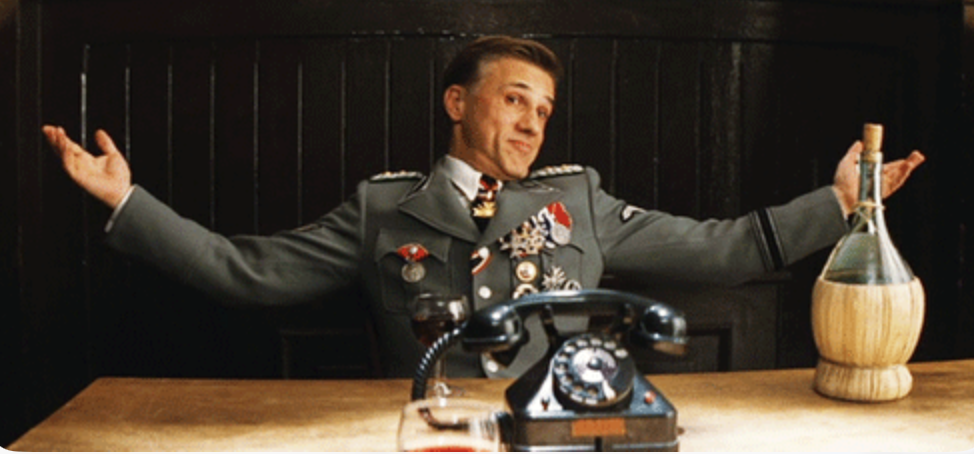
Wait, you're telling me there's politics in design choices‽‽‽
C. Thi Nguyen: Autonomy and Aesthetic Engagement (2020)
The philosopher C. Thi Nguyen argues, in Autonomy and Aesthetic Engagement and his "engagement account" of aesthetic value, that everyone above is staring at the wrong thing.
We've all been obsessed with the verdict: what's the correct judgment of this object, and who gets to issue it. Nguyen says the value of aesthetic life was never in arriving at the right verdict. It's in the activity of grappling toward one. The looking, comparing, arguing, revising. The engaged process of trying to figure out why something moves you. That's the good part. That's the entire point.
Deferring to a critic's verdict is like reading the answer key to a crossword. You technically "have the right answers" now. You've also annihilated the reason to do a crossword. We deliberately avoid shortcuts to good aesthetic judgments, and that avoidance is the tell, it proves our real interest was in the doing, not the having. Taste isn't an output. It's a practice.
At this point, I would like to apologize to all the humanities majors in the audience for my gross oversimplification of the last 250 years of philosophy and taste. But bear with me as I have a point here:
So how do you actually give AI taste?
First problem: we're rebuilding Hume's ideal critic, badly. Strip the marketing off almost every "give AI taste" effort and the architecture is identical: scrape what the tasteful people liked, compress it, pattern-match new work against the average. That is the ideal critic: synthesized from a corpus instead of born in a person. Which means you inherit every one of Hume's problems (the circularity, the "whose critics" question) and you add a fatal new one: averaging. An ideal critic distilled from the aggregate is, by construction, the mean. And the mean of all taste is exactly the cold, competent, offends-no-one center we've been calling slop. You don't get Chopin by averaging a million piano pieces, you get elevator music. The ideal-critic approach doesn't fail to solve slop. It makes it worse.
Second problem: taste is not a neutral object, and we keep labeling it like one. A model that "knows" brutalism is ugly doesn't know that brutalism was an argument: a response to the false comfort of modernism, politics poured in concrete. This is Bourdieu's point with a GPU attached: taste is contextual, historical, political, and the second you flatten it into good=1, bad=0 you've deleted the actual content. A system that scores aesthetics with no theory of why-good-here-for-these-people-against-this-history is doing astrology with extra steps.
Third problem: the thing has no stake. Every account above roots taste in something a model structurally lacks. Kant's shared human sense. Bourdieu's lived class position. Nguyen's first-person engagement. These are properties of being a someone: situated, embodied, with a history and something to lose. And this is where "give the AI taste" slides frictionlessly into pretending the model is a someone. It isn't. It's spicy autocomplete, a magnificent statistical engine for the next token. That's not an insult, it's the spec. Papering over the spec by anthropomorphizing it "the model has taste now" is how you ship a confident bullshitter and call it a critic.
Okay... but I'm going to use AI to make stuff anyways
Look, I don't have the answer exactly. But if I'm betting, it's in the process and the context, not the corpus. The whole "here are 10,000 good designs and 10,000 bad ones, learn the boundary" paradigm is doomed by design.
What might actually work looks less like a labeled dataset and more like a context graph you can walk. Less "here's good stuff and here's bad stuff, pattern-match" and more "here's a thing, and here's the dense web of reasons it's considered good: in this place, for these people, against this history, in tension with these other things."
Well, maybe we just train a bigger model and toss in a few art history books?... Whether a thing is good is decided by a reason that usually isn't sitting on its surface. Brutalism's "good" lives several causal hops back. This building answers a postwar housing problem, which was a revolt against prewar ornament, which stood for a social order the architects were repudiating. None of that resembles a photo of grey concrete. That's not a skill issue you train away with a larger corpus.
The reason a design is good rarely looks or sounds like the design itself. And every causal hop from the object toward that reason, the words drift: "grey concrete" doesn't sound like "postwar housing" doesn't sound like "a revolt against ornament"... and the drift compounds, so each hop out the trail goes cold faster than the last. Two or three hops deep, which is exactly where taste lives, resemblance has nothing left to grab onto and the AI is just guessing.
I was joking earlier, but you probably should feed it some art history books, just not as a pile to pattern-match. Computers can follow labeled links [answers, supersedes, rejects] straight from one node to the next, and the words can drift all they want, a stored link doesn't care. Being a total shill here: Brief's paper, Depth, Not Length, does the real math on graph traversal.
Until the graph is deep enough to carry the politics and the history and the stakes, and right now it's nowhere close, we're going to keep getting confident, competent, contextless slop. And we're going to keep being surprised that the thing with no skin in the game can't tell us what's beautiful.
And yeah, I know: "beautiful", "good" and "Taste" are loaded, circular, political words with nothing stable underneath them, so even if you do solve the context problem, you have to deal with that rabbit hole. But, you know, work with me here.
← Back to Blog