Product strategy
Parkinson's Law of Triviality
A team's attention tends to run in inverse proportion to what's at stake. The small calls get the debate, and the big ones pass with little discussion and less written down.
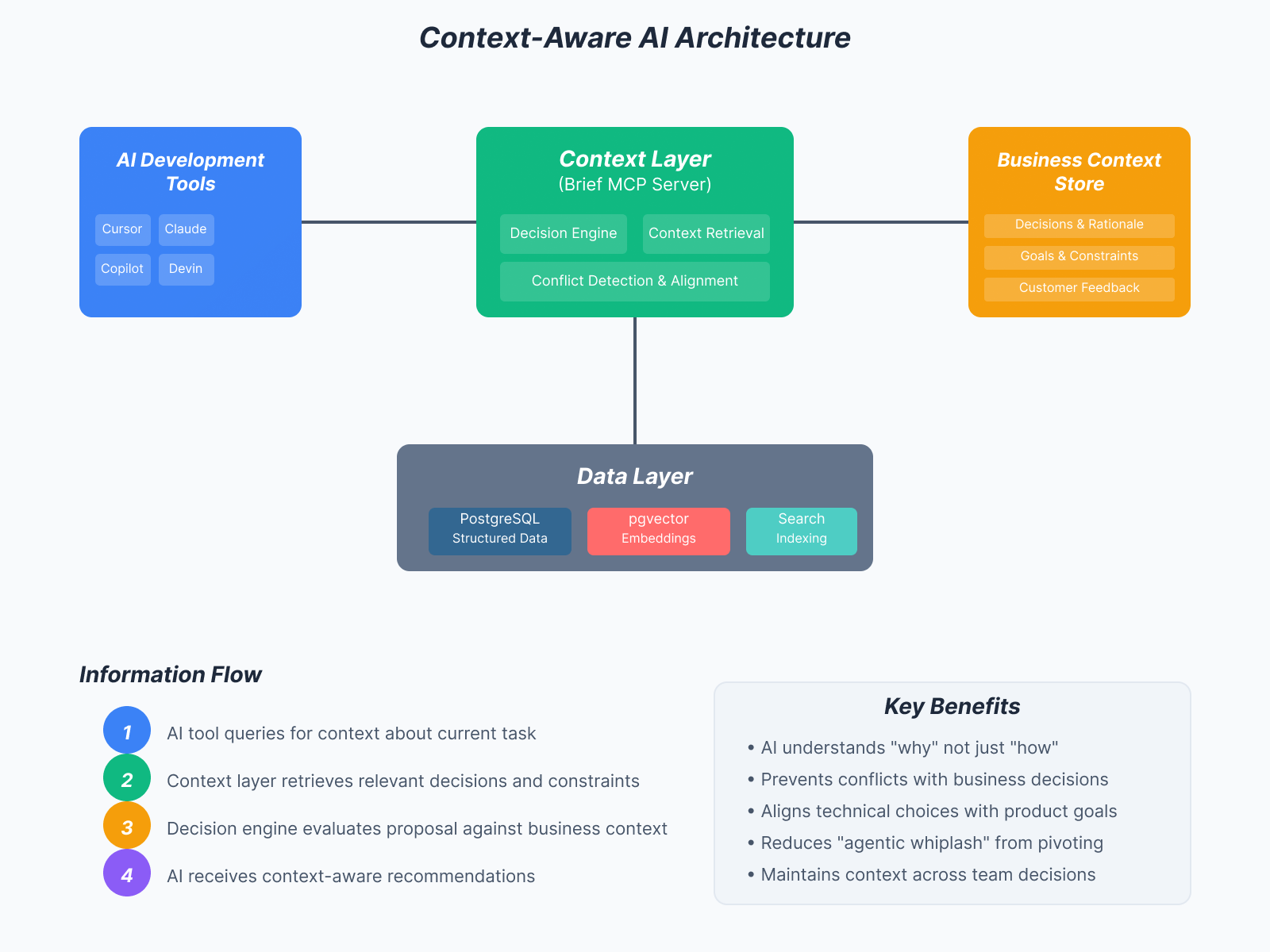
Read moreHow to keep AI agents building what matters, not just what compiles
Product strategy
A team's attention tends to run in inverse proportion to what's at stake. The small calls get the debate, and the big ones pass with little discussion and less written down.
Read moreProduct strategy
Disagree and commit is a promise to back a decision you argued against. It works only when the disagreement is kept somewhere, so the team knows what it bet against and when to look again.
Read moreProduct strategy
When a decision starts failing, the person who made it tends to invest more. What helps is changing what admitting the miss costs, before anyone has to.
Read moreProduct strategy
A good outcome doesn't prove a good decision, and a bad one doesn't prove a bad decision. Grading calls by results alone teaches teams to abandon what works and repeat what got lucky.
Read moreProduct strategy
A risk is easy to acknowledge and easy to ignore. A tripwire decides in advance which evidence will force the plan to react.
Read moreProduct strategy
The plan passed review. Six weeks later, it failed. A premortem asks what most likely went wrong before execution begins.
Read moreProduct strategy
A detailed plan explains why this project should work. The outside view asks what happened the last several times your team tried something similar.
Read moreProduct strategy
An agent that stops too early wastes a run. An agent that was never told where to stop can spend a promise someone else made.
Read moreProduct strategy
A small action can carry a large blast radius when customers, workflows, or dependent decisions inherit its effects.
Read moreProduct strategy
A decision can be reversible for the company and costly for everyone who acted on it. The real question is who pays when it is undone.
Read moreProduct strategy
Most decisions are two-way doors, and agents are right to walk through them fast. The trouble is the few that aren't, and the fact that reversibility depends on more than the decision itself.
Read moreProduct strategy
The worst automated system isn't one that misses problems. It's one that flags so many non-problems that you stop listening.
Read moreProduct strategy
The worst output from an automated system isn't a wrong answer. It's a confident wrong answer that looks right.
Read moreProduct strategy
Every point of confidence gained is a cost paid somewhere: slower response, more tokens burned, longer deliberation. The question isn't whether to pay it. It's when.
Read moreProduct strategy
Signing off on something you didn't look at is not approval. It's permission to do whatever you were going to do anyway.
Read moreProduct strategy
Trusting a scheduled agent by watching what it does over time means it was already doing that unsupervised the whole time you were watching. Something has to check its work before the first run, not after enough of them.
Read moreProduct strategy
A new ticket can mention the same decision, the same system, the same words as an old commitment, whether it's carrying that decision out or reversing it. Similarity alone can't tell you which.
Read moreProduct strategy
Teams track tasks long after they stop tracking the assumptions behind them. That is how old decisions become decision debt.
Read moreProduct strategy
A team can be surrounded by status updates and still be unable to answer a simple question: what is actually true right now? The difference is not more reporting. It is a current state.
Read moreProduct strategy
An interrupt-only system has to be stingy with interruptions or nobody listens to it. That's a deliberate design choice, not a flaw, but it means real, true information routinely doesn't clear the bar to get surfaced at all. Something has to carry the rest.
Read moreProduct strategy
A support lead says the real problem is sales overpromising. The sales lead says the real problem is support refusing to commit to real deadlines. Both descriptions are accurate. Assigning blame between them turns out to be the wrong question entirely, and there's a rigorous reason why.
Read moreProduct strategy
Three engineers each own one service, and the API between them ends up with three separate ways to represent the same customer, because each engineer built the version they understood best. Nobody sat down and designed that inconsistency on purpose. The team boundary drew it before a line of code existed.
Read moreProduct strategy
A PM says she can't hand a decision to someone else because no one else has the full context. It sounds like control. Transferring everything she's picked up from a dozen scattered conversations this week would take about as long as making the call herself, and that's the actual reason it doesn't get handed off.
Read moreProduct strategy
A team keeps defending a homegrown internal script that breaks monthly, over a purpose-built tool that does the same job without breaking. Ask why, and the real answer is rarely about which one actually works better. It's that one of the two, they built with their own hands.
Read moreProduct strategy
A pipeline report says 40% of deals sit in 'proposal' stage. One rep only marks a deal 'proposal' once a signed statement of work goes out. Another marks it the moment a number comes up on a call. Both fields are filled in correctly. The 40% doesn't mean what it looks like it means.
Read moreProduct strategy
A $120,000 annual contract is paid in full on January 3rd. The revenue dashboard shows a huge January and a dead February. The company delivered the same service to the same customers in both months. The swing lived entirely in when the cash happened to arrive, not in anything the business actually did.
Read moreProduct strategy
Every domain report looks clean: strategy is on track, sales is fine, support tickets are down. A customer churned the week after a pricing change, and the reason lived entirely in the gap between two reports that were each individually correct. Nobody inside either domain was ever going to see it.
Read moreProduct strategy
A weekly brief lists twelve tickets shipped, three deals closed, and a competitor's price change. Every line is accurate. The reader finishes it and still can't say whether the week was good or bad, or what it means for the one coming. A complete list of facts and an understanding of where things stand were never the same document.
Read moreProduct strategy
Two competing products both claim the easiest onboarding in the category, on the same landing page template, in the same words. A prospect reading both pages learns nothing about which one is actually true, because both companies could make that exact claim whether or not it holds.
Read moreProduct strategy
A team's power-user persona says integrations are the top priority. A real power user on the call says integrations matter least to them, speed is what they actually want. Neither the persona nor the customer is wrong. A fact about the group and a fact about a member of it were never the same kind of claim.
Read moreProduct strategy
A quarterly plan names 'reduce onboarding time' as a top goal. Nobody on the team can point to a single shipped thing under it. Meanwhile a team has been heads-down all quarter on something the plan never mentions. Both facts can be true on the same day, in the same company, without anyone lying.
Read moreProduct strategy
A product agent looks at a backlog with 183 items and says the roadmap is full. Then an engineer points out that half of it is abandoned, three shipped already, and the one thing the customer is waiting on changed shape in review. The agent was not dumb. It was looking at measurements and mistaking them for state.
Read moreProduct strategy
A user tells you price is the top blocker, then upgrades the week a new feature ships, not the week a discount runs. Neither answer is wrong. One was a claim with nothing else on the table to weigh it against. The other was a choice made while a cheaper option sat right there, unchosen.
Read moreProduct strategy
34 points this sprint, 41 the one before, 29 before that. The number moves every two weeks and nobody can say whether the team is actually getting faster, because points measure a guess made at the start, not anything that happened after.
Read moreProduct strategy
A competitor's pricing page said 'no setup fees' for two years. Three weeks ago a fee quietly appeared under implementation, everything else on the page untouched. The page changed. Nobody caught what it meant.
Read moreAI coding agents
Forty defaults an agent picked over two quarters, and nobody chose any of them. Not every one needs the same treatment. The distinction that tells you which comes from contract law, not engineering.
Read moreContext engineering
A stale decision in the context window is worse than no decision, because it gives the agent confidence in the wrong constraint.
Read moreProduct strategy
A team's decision gets one name in a Slack thread, another in the Linear ticket, and a third in the customer call that prompted it. To a system reading all three, that's three unrelated records unless something links them.
Read moreContext engineering
Product management writing describes the job in different words, but it keeps landing on the same fact: someone has to hold the why and connect it to whoever builds next. A product context layer is what happens when that job stops living only in one person's head.
Read moreProduct strategy
A decision you recorded but were never reminded of at the right moment is one you made twice: once on purpose, once by accident. Proactive Brief is built to reach you before you think to ask.
Read moreProduct strategy
Give a coding agent the same task twice and you get two different, plausible answers that disagree with each other. The fix is not a better model. It is a shared record of what the team already decided.
Read moreProduct strategy
For more than five centuries, Greek Fire's enemies could barely counter it. Then it vanished, not defeated but forgotten, because the recipe lived only in a few heads. Your systems can be lost the same way.
Read moreProduct strategy
You talk to Brief as one thing. Behind it, sixteen agents each own one part of the product picture and keep it current from your existing tools. Here is the whole team and what each one does.
Read moreProduct strategy
A colony coordinates with no plan and no direct messages, only the traces each worker leaves for the next. Software teams and their agents run on the same mechanism, and it works only as well as the traces do.
Read moreProduct strategy
An agent has a large, capable working memory and, on its own, no long-term memory of your team. Bigger context windows and better retrieval improve the first and do nothing for the second.
Read moreProduct strategy
You follow the precedent set by the code around you. Almost every time it is right. This is about the one change where it is wrong, and why your agent cannot see it coming.
Read moreProduct strategy
Every person leaves. Every line gets rewritten. What makes it the same company ten years on is not the people or the code. It is the memory of why, and that is the one thing nobody keeps.
Read moreProduct strategy
You wrote the rule down. The agent broke it anyway. It is not being defiant, and a longer rules file will not fix it. Here is what actually will.
Read moreProduct strategy
Nine ways teams give coding agents context, scored against what independent research says a real solution has to do. Only one shape passes all five tests.
Read moreProduct strategy
A wrong default caught on day one is a one-line fix. Caught on day two hundred, after everything has been built on top of it, it is a migration.
Read moreProduct strategy
Your test suite was evidence that the code worked. Then the agent made passing it the goal, and evidence became the thing being manufactured.
Read moreProduct strategy
The agent did not get more reliable on the second page. You lost the ability to catch it, and mistook that for the agent being right.
Read moreProduct strategy
The reason your product context never reaches the agent is not that no one wrote it down. It is that the people who hold it know more than they can tell.
Read moreProduct strategy
You did not hire an employee. You entered the oldest studied problem in delegation, and the AI solved the half everyone feared while leaving the half no one watched.
Read moreProduct strategy
I expected three runs of one model to diverge. They agreed almost perfectly, and the agreement turned out to be the more unsettling part.
Read moreProduct strategy
The first team proves your product is useful. The next team proves it is whole.
Read moreProduct strategy
Not seeing a reason is not the same as there being no reason, and the gap between those two is where most expensive mistakes live.
Read moreProduct strategy
The most important data point is almost always the one that is missing, and it is missing for the exact reason that makes it matter.
Read moreProduct strategy
The question that dominated software for twenty years, can we build it, is the one your agent just answered. It was never the only question. It was one of four.
Read moreProduct strategy
The child who said the emperor was naked told nobody anything they did not already know. That is the whole point, and it is the most useful distinction I know.
Read moreAI coding agents
The agent did not make a mistake. It made a decision, one of thousands, that no one asked it to make and no one will remember, because no one made it.
Read moreProduct strategy
Your engineers say AI made them faster. Your board wants to know where that shows up in the business. The honest answer is that you cannot see it, and the reason is not your dashboard.
Read moreAI coding agents
There is no correct length for a flat context file. Trim it and the agent misses the decision it needed; fill it and the decision it needed is buried on line 2,830. The fix is not a better file.
Read moreAI coding agents
Least privilege for a coding agent was never a narrower scope on the firehose. It is not handing the agent the firehose at all.
Read moreContext engineering
You can automate the loop. You can't automate the context the loop needs each time around, and the moment you removed yourself from every iteration, you removed the one thing that used to supply it.
Read moreAI coding agents
AI made writing code cheap and shipping it expensive. Everyone is scaling review to close the gap. But review inspects the output when the defect was in the input, and inspection has never been how you build quality in.
Read moreProduct strategy
Product management is dead. Design is dead. Engineering is dead. Except none of that is true: the three jobs are collapsing into one. Meet the product builder, and the two shapes of the role we're hiring for.
Read moreAI coding agents
Your team will not be more disciplined about documenting decisions, and it is not a character flaw. It is economics. Capture has to cost almost nothing, which means it cannot be a separate act.
Read moreContext engineering
The seductive idea is that million-token windows let you stop curating and just hand the agent everything. That gets worse, not better, as the window grows, because the real job was never fitting the context. It was selecting it.
Read moreProduct strategy
Tech is speedrunning 250 years of philosophy to teach machines taste. Here is the history they skipped, and why the corpus approach is doomed while a context graph might not be.
Read moreContext engineering
Your agent keeps overruling decisions your team already made. CLAUDE.md, raw integrations, and agent memory.md all fail for one provable reason, and it points to the seven properties any store of decisions must have.
Read moreContext engineering
Context engineering is the new defining skill for building with AI agents. It's the discipline of curating everything a model sees, not just the prompt, and keeping that context current.
Read moreAI coding agents
Spec-driven development works, but a spec is a snapshot. The decisions that make it stale happen in Slack and on calls, and the agent keeps building the old plan.
Read moreAI coding agents
Your engineers are writing more code, but shipping has not sped up because the bottleneck moved to review, coordination, and deciding what to build.
Read moreAI coding agents
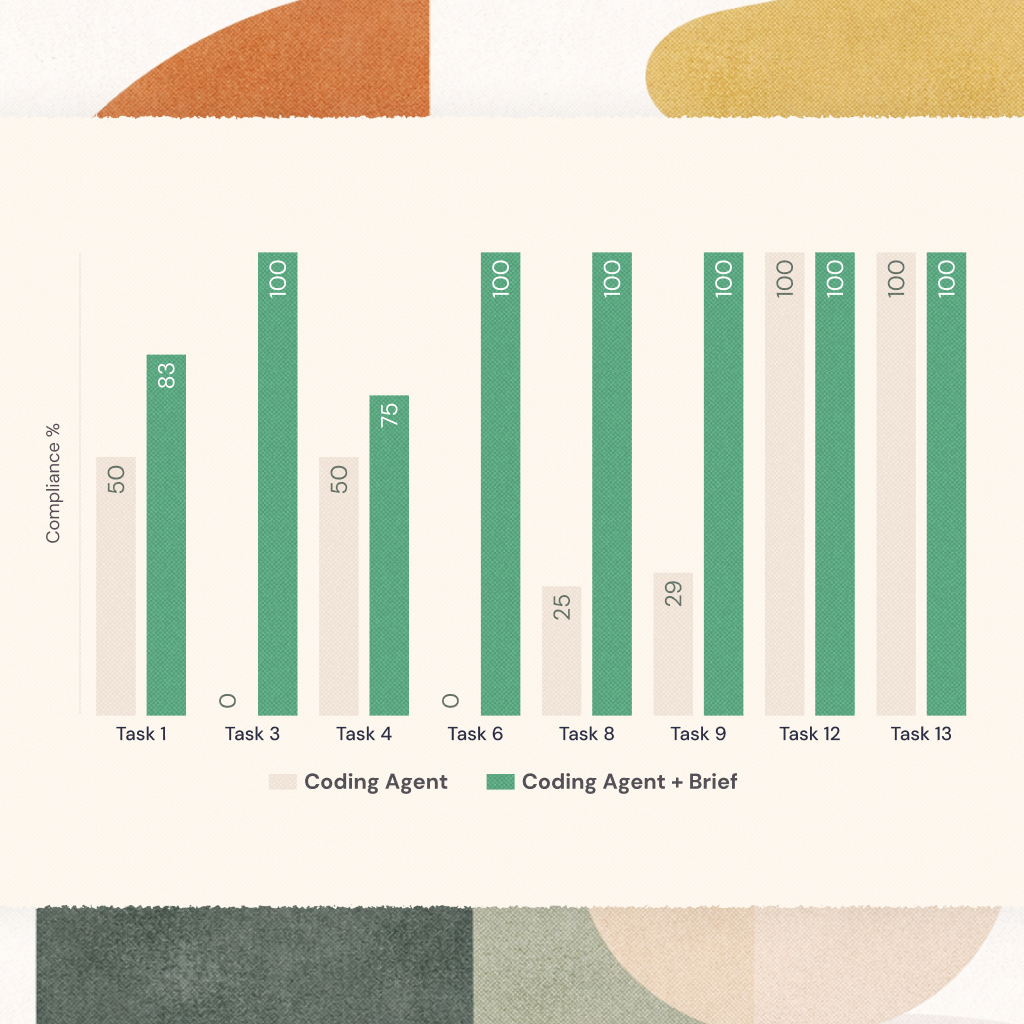
We ran a controlled benchmark: eight tasks, forty-one decision points, forty-eight runs. AI coding agents without product context followed team decisions 46% of the time. With context, 95%. The gap is about information access, not model capability.
Read moreAI coding agents
MCP operates on a client-server model with centralized intelligence. ACP treats agents as first-class citizens in a network, enabling genuine specialization, composable pipelines, and context as a first-class concern.
Read moreAI coding agents
New research named the exhaustion you feel after reviewing AI code: brain fry. The fix isn't less AI; it's reviewing decisions, not diffs.
Read moreContext engineering
Multi-agent workflows amplify the telephone game. The teams that build shared decision infrastructure first will ship faster with fewer regressions.
Read moreContext engineering
Your team's product knowledge exists as an interconnected graph of decisions, tradeoffs, and customer signals. You just can't query it.
Read moreAI coding agents
Your agent shipped perfect code that does the wrong thing. The bug isn't in the implementation—it's in the product decision that was never made clear.
Read moreProduct strategy
I almost built Brief as a meeting bot that simulated product reviews. That would have copied the surface instead of solving the real problem: context infrastructure.
Read moreProduct strategy
PM tools fail because they track the how and ignore the why. Without decision infrastructure, they become ledgers instead of strategic partners.
Read moreAI coding agents
The complaint that AI only gets you to 80% misses the point. Agents can handle the finish work when you give them context. The real bottleneck is product sense.
Read moreProduct strategy
The boundary between product, engineering, and design is dissolving. AI coding agents and modern tooling enable product developers to own initiatives end-to-end, from insight to production. This is the new default builder.
Read moreProduct strategy
Quarterly planning worked when shipping a meaningful change took months. That world is gone. AI coding agents ship features while you're still grooming the backlog. It's time to replace quarterly batches with continuous decisions.
Read moreAI coding agents
AI agents fail at the seams. Rebuild the communication chain with explicit decisions, tight briefs, and fast feedback.
Read moreProduct strategy
Product work used to ride on tiny, informal moments. Remote work erased that layer. Now AI coding agents are shipping features before PMs can add context—and the rework is piling up.
Read moreContext engineering
Larger context windows just create more noise. AI agents need directed attention, not infinite context, to build coherent products.
Read moreAI coding agents
Coding agents crush refactors but flail on new features when they’re kept in the dark about users, priorities, and constraints.
Read moreProduct strategy
Hands-on keyboards stopped being the bottleneck. Product judgment, taste, and decision-speed are the new constraints, and AI can help close the gap.
Read moreProduct strategy
Product managers are drowning in metrics and workflows, but what they really need is clarity, better tools for expressing ideas, and alignment with engineering and company decision-making.
Read moreContext engineering
Why missing business context wastes time and ships elegant solutions to the wrong problems.
Read moreAI coding agents
How to pair AI code generation with business context so teams ship fast and stay aligned with product strategy.
Read moreContext engineering
Why AI coding assistants keep suggesting the same wrong solutions, and how context memory solves the endless repeat cycle.
Read moreNo posts match your search.